Commercial Buildings in Québec: Solar, Storage and Smarter Energy Decisions
How commercial buildings can cut energy costs with solar, storage and subsidies
Grocery stores, pharmacies, offices, multi-unit residential buildings: Québec's commercial buildings use a lot of energy, yet most of them have never been truly optimized. Low electricity rates, busy owners and complex programs mean decisions are often postponed, or made one equipment at a time.
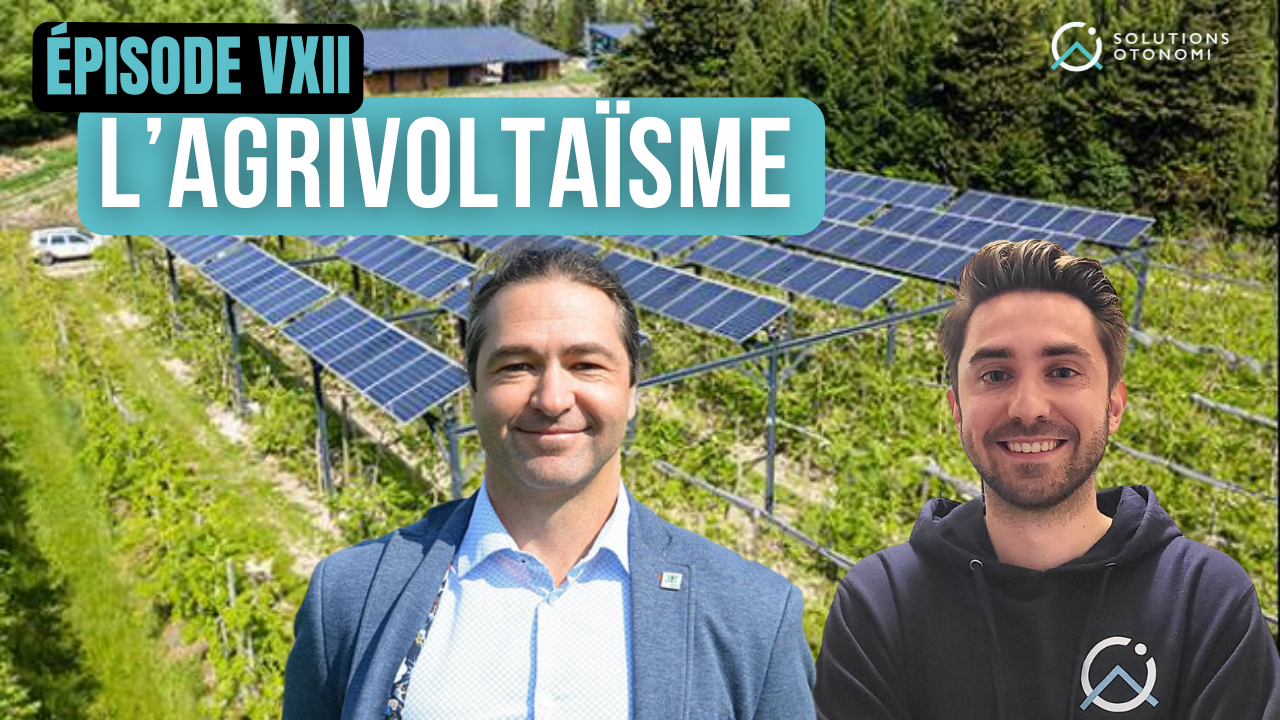
In this episode, Floréal Villanova sits down with Jérémy Boucher, electrical engineer and CEO of Vadimap, a Québec-based software that automates energy analysis for commercial, industrial, institutional and multi-residential buildings. Together, they look at what's really happening in this market, and at what owners and electricians can do about it.
In this episode ☀️
- What "commercial building" really covers in Québec
- Hydro-Québec's G and M rates, and why a single demand peak can cost you all year
- The "like-for-like replacement" trap when equipment reaches end of life
- Subsidy programs and the upcoming mandatory energy consumption reporting (2027–2028)
- A real case: a solar + storage system that paid back over 50% of its cost during a 4-day ice storm outage
- Why commercial rooftops are a major opportunity for solar
- The financing gap: projects too big for a small business, too small for the banks
- A 360° retrofit in Shawinigan combining solar, batteries, a heat pump and a smart kitchen hood
- Why payback period alone is not enough to judge a project (and what net present value reveals)
- Partnerships and collaboration: how the market will take shape in the coming years
About the guest 🎙️
Jérémy Boucher is an electrical engineer, CEO and co-founder of Vadimap, and a speaker on the energy transition. Launched in 2019, Vadimap translates complex energy data (rates, subsidies, regulations) into clear business cases for building owners. The company operates across Canada and opened a subsidiary in France in 2026.
Website: www.vadimap.com
Links
🎧 Spotify
Working on commercial solar projects? Discover how Otonomi DX helps solar professionals size and quote projects faster.
FAQ
What counts as a commercial building in Québec?
In this episode, "commercial" covers commercial, industrial, institutional and multi-residential buildings: grocery stores, offices, retail stores, hardware stores, pharmacies, private seniors' residences and apartment buildings. Their consumption profiles vary widely, which makes energy decisions more complex than in residential.
What is the difference between Hydro-Québec's G and M rates?
Rate G is for small business customers whose demand stays under 65 kW: the bill is driven mainly by the energy used (kWh), since the first 50 kW of demand are not billed. Under Rate M, for medium-power customers, demand is billed every month. According to Jérémy Boucher, a single peak, when many machines start at once, can then weigh on the bill for the rest of the year.
Are batteries worth it for a commercial building?
In the projects discussed, the main reason for adding storage was resilience: staying operational during outages and protecting perishable goods or medication. Batteries can also be used to cut consumption during winter peaks, which Hydro-Québec rewards with bill credits through its demand response options for business customers.
What new obligations are coming for building owners?
Québec now requires large buildings to report their energy consumption every year. The first report is due by June 30, 2027 for commercial and municipal buildings of 5,000 m² or more and for residential buildings with 50 or more units. In 2028, the requirement extends to buildings of 2,000 m² or more and to residential buildings with 25 or more units.
How can a commercial solar project be financed?
Options include a line of credit with collateral, the energy retrofit financing programs the Canada Infrastructure Bank runs with BMO and Scotiabank, and energy service companies (ESCOs), which guarantee performance and are paid from the savings. According to Jérémy Boucher, financing remains limited for mid-sized projects, while most projects Vadimap recommends are around $150,000.