V2X — Can Your Electric Vehicle Become a Battery?
An emerging technology that's reshaping how we think about energy
Your electric vehicle sits in the driveway most of the time. What if that battery on four wheels could power your home, ease grid demand during peak hours, or even charge another vehicle?
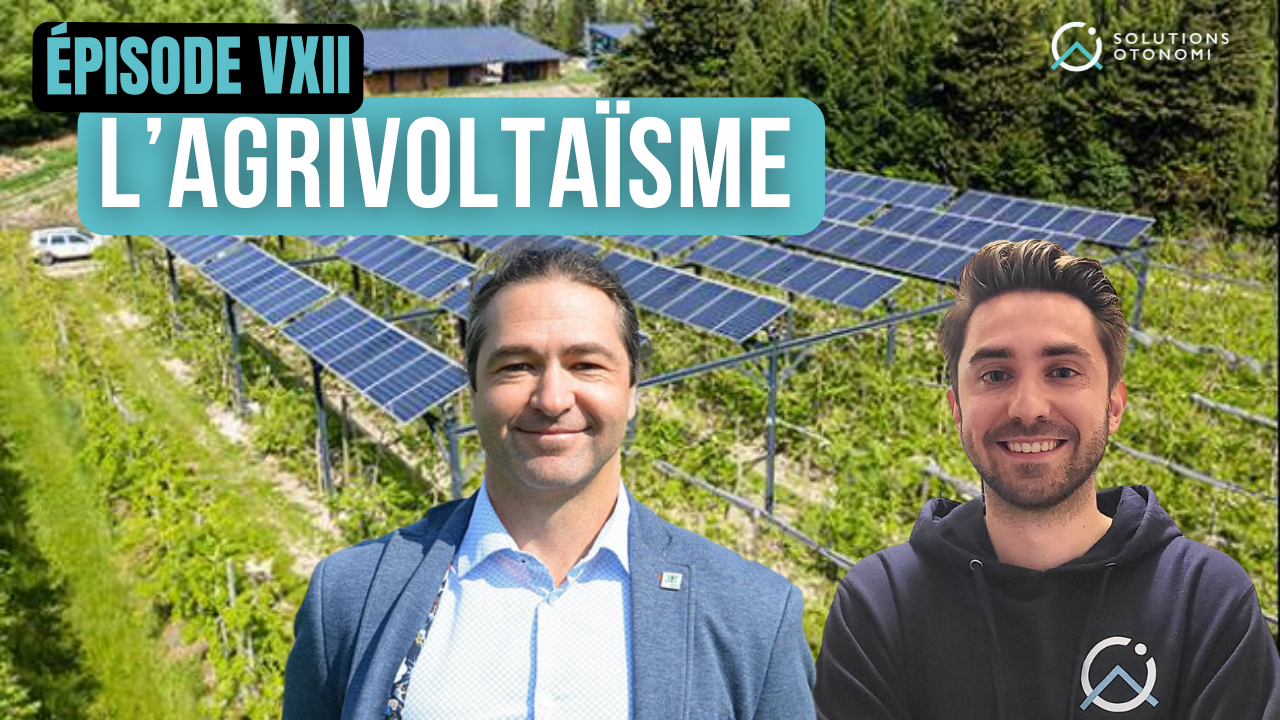
That's exactly what V2X — vehicle to everything — makes possible. It's a family of bidirectional technologies still in its early days in Quebec, but gaining momentum fast. In this episode, Floréal sits down with Sébastien Pothier, entrepreneur and specialist in building and parking electrification, to break it all down.
They start from the basics — V2H (home), V2B (commercial building), V2G (grid), V2V (vehicle to vehicle) — and work through the concrete realities of the Quebec market. An honest, ground-level conversation.
In this episode ☀️
- V2H, V2B, V2G, V2V: the differences explained simply
- What equipment you actually need to get started (certified charger, hybrid inverter, smart panel)
- The Quebec reality: standards, Hydro-Québec approvals
- Which vehicles are compatible today (Ford Lightning, Tesla Cybertruck…) and why many are still software-locked
- Available subsidies — provincial and federal — and what's still under review
- Global comparison: China, Japan, Europe vs Quebec
- Barriers to adoption and the early adopter profile
- Practical advice for anyone ready to take the leap
About the guest 🎙️
Sébastien Pothier — Entrepreneur and founder of Konnecta. Sébastien defines himself as an architect and project manager in building and parking electrification, with over thirty years in technology. He delivers V2X training and advocates for making these technologies accessible to all Quebecers.
Website: www.konnecta.ca
Links
🎧 Spotify
▶️ YouTube Music
FAQ
What is V2X?
V2X (vehicle to everything) covers the bidirectional charging technologies that let an electric vehicle send energy from its battery back out: to a home (V2H), a commercial building (V2B), the power grid (V2G) or another vehicle (V2V).
What equipment do you need to power your home with an EV?
You need a certified bidirectional charger, a system that isolates the home from the grid during an outage (inverter and transfer switch) and, often, a smart electrical panel to choose which circuits stay powered. Most automakers sell their own package, compatible only with their vehicles.
Which vehicles can power a home today?
In North America, the Ford F-150 Lightning, Tesla Cybertruck, Kia EV9 and recent GM electric vehicles are among the compatible models, each with its manufacturer's equipment. Other vehicles have the technical capability but remain software-locked. Always check the exact model and year.
Can you install a V2X system in Québec?
Yes, for home backup use, as long as the installation meets electrical codes and is done by a master electrician. Sending energy back to Hydro-Québec's grid (V2G) is still at the pilot stage: Hydro-Québec expects it will take a few more years before bidirectional charging becomes widespread.
Are there subsidies for V2X?
There is no dedicated V2X program in Québec yet. Some equipment, such as charging stations, may qualify for existing incentives, and other programs are under review. Check the programs currently in force before starting a project.